

|
|
| Home > Direct Response Articles > 3 Powerful and unique direct marketing formats: Magalogs, bookalogs and three-dimensional packages |
|
|
3 Powerful and unique direct marketing formats: Magalogs, bookalogs and three-dimensional packages There are three powerful and unique direct marketing approaches that can set you apart from the crowd. Magalogs, bookalogs and three-dimensional packages are just three marketing formats that accomplish that objective, and produce the kind of results marketers often dream about.
The magalog, or magazine sales format, produces outstanding results for both business-to-business and consumer marketers. It provides a refreshing alternative to the sameness of the traditional direct marketing package and possesses a longer life span and a greater “pass-along” value. In comparison to the traditional catalog (with which it has an affinity), the magalog does not attempt to sell a variety of products. It usually focuses on one product, with a variety of editorial features that highlight that product. One of these editorial features is the “sidebar.” Sidebars are smaller articles that usually focus on one point or benefit, and often end with a specific reader “call to action.” Many times, sidebars will offer a FREE Special Report, as an added inducement to subscribe or buy. This emphasizes the free bonus and directs the reader’s attention to the order form. Covers should be informational in orientation. Page numbers for the various articles are provided to “tease” the reader. The utilization of bullet copy lets the prospect know what topics will be revealed in the magalog. These bullets are similar to teaser copy in a traditional direct mail piece, in that they promise substantial information. The back cover should have more bullet statements outlining the articles in the magalog. For the aggressive marketer, changing the cover is similar in impact to changing teaser copy on an envelope. The cover will create a completely new impression, enabling a magazine format to have a relatively long life with repeated mailings, though the internal copy stays relatively the same. What you say on pages 2 and 3 is critical, and can mean success or failure. These pages generally contain a letter from the editor stating the purpose of the magalog, a table of contents, or sometimes, the beginning of the lead article. Most formats are 16, 20, 24, 28 or 32 pages long, since printers find it most convenient to print in sets of 4 or 8. Usually, magalogs with page counts in multiples of 8 will be the least expensive. Obviously, the order form is one of the most important parts of the magalog. The order form should take up the last one or two pages. For two-page order forms, one page should be devoted to the mail-in certificate and information about the product. The other page should have extensive information on bonuses and guarantees. All the elements of a proper order form should be present. In order to make the magalog look more upscale and reputable, four-color is recommended throughout. If cost is an issue, four-color should be used at least on the front and back covers. Magalogs usually generate much higher returns than the traditional #10 envelope. The initial up-front costs are greater, but once the roll-out has begun, the cost drops, making the magalog more cost-effective than a traditional letter in an envelope in large mailings. This permits more aggressive marketing at a time when other costs are rising.
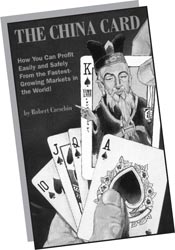
Bookalogs are not new, and they have been proven to work exceptionally well. Though a bookalog is most definitely a marketing vehicle, it is not perceived by the consumer to be a sales piece. It is perceived to be a book. Most bookalogs are softbound and possess all the aspects of a normal book (i.e., a table of contents, a dedication, an appealing title that makes the recipient want to read it and so on). The bookalog is a positioning instrument for a company and contains valuable information, generally educational in nature. It makes the statement that the company is an authority on the product or service described within. Creating a definite product differentiation, there is an implication that the product is exceptional enough to be written about in a book. This gives the company or organization credibility and by the time the recipient has put down the “book,” he or she has learned a great deal. Yet, in reality, the bookalog has one basic and distinct objective, and that is to sell the product or service. While bookalogs come in a variety of formats, investment newsletters are probably the most popular. Some of these newsletters have generated over 100,000 new subscribers paying over $50 per subscription. Michael Gerber wrote and disseminated a “book” entitled E-Myth. It became a popular “book,” yet in reality it was selling his consulting services. Over the years, Covenant House has mailed “books” about the Covenant House story to millions of people nationwide. The book is really a marketing piece to motivate charitable giving and has become one of the organization’s most successful fund-raising activities. Bookalogs follow all the proper direct response rules. The following are six rules you should be aware of as you create your bookalog:
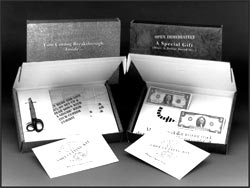
Marketing to highly targeted prospects, especially businesspeople, can be a difficult challenge. But, when the profit margin is high enough, one of the most effective ways to get your message to the desired destination with the greatest possible immediate impact—and the highest possible response rate—is a three-dimensional package. Three-dimensional marketing uses highly creative oversized or odd-sized packages that have the appearance of a gift. These packages are usually sent Federal Express or UPS, and are designed to get past the mailroom and into the hands of the targeted decision maker. Even the most jaded executive will find it difficult to resist opening a mysterious package that has the appearance of a gift. The package might be an odd-sized envelope, a cardboard or wooden box, or a tube. The contents could be a jigsaw puzzle with missing pieces, the beginning of a collection of special items, a lock with an offer to deliver the key—or a variety of other items that come from an especially creative imagination. The results from three-dimensional mailings are usually very high. Unlike traditional direct mail pieces, of which only 10% get to the targeted recipient, these intrusive hands-on pieces trigger a response rate that is 5 to 50 times the normal rate. With a three-dimensional campaign you’re able to break through the mailroom clutter, dramatically make your presentation and set the stage for your phone call. If the prospect doesn’t call first, a good salesperson will initiate a call with the reminder: “We’re the company that sent you the .” It’s amazing how creative three-dimensional packages break down barriers. Editor’s note: I’d be glad to talk to you about these powerful marketing tools. One of them could provide you with the marketing breakthrough you’ve been looking for. Please call me at (310) 212-5727, fax (310) 212-5773, email me at craig@cdmginc.com or write to CDMG at 21171 S. Western Ave., Suite 260, Torrance, CA 90501. |
|
|
Copyright ©2006 CDMG, Inc. All rights reserved. |



 Magalogs
 Bookalogs
 Three-dimensional packages